ChopinGamesWhat connects usFog and concreteWhat I doAbout me
PLEN日本語
Contact
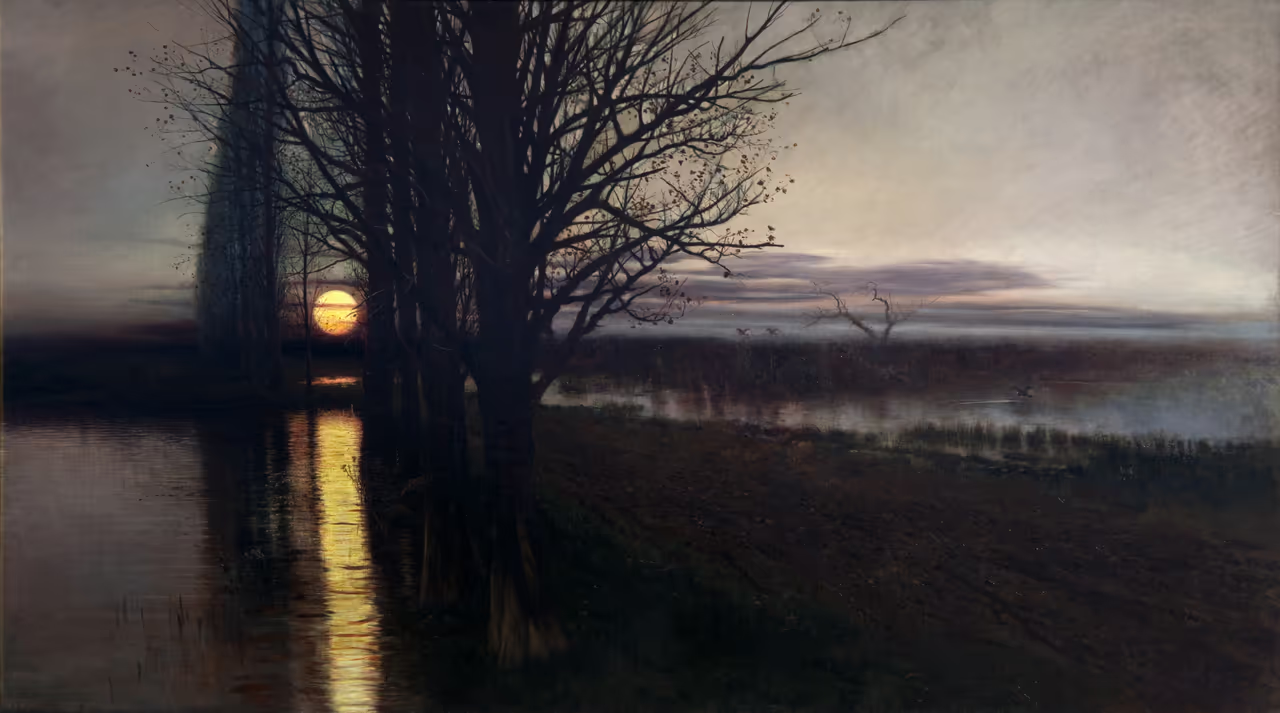
Night landscape: the moon rising over water behind dark trees
Stanisław Masłowski, “Moonrise”, 1884 · National Museum in Kraków
A page for Japanese companies

Hello!
This is Iskra –
a Polish web development studio.

Iskra is Polish for a spark: the small flash that starts something.

Poland has many of those. Chopin shines brightest – but I want to show you the ones that are talked about less.

At the end of this journey I'll make you a concrete offer: Polish sensibility for your product on its way to the European market.

Let's set off Straight to the offer
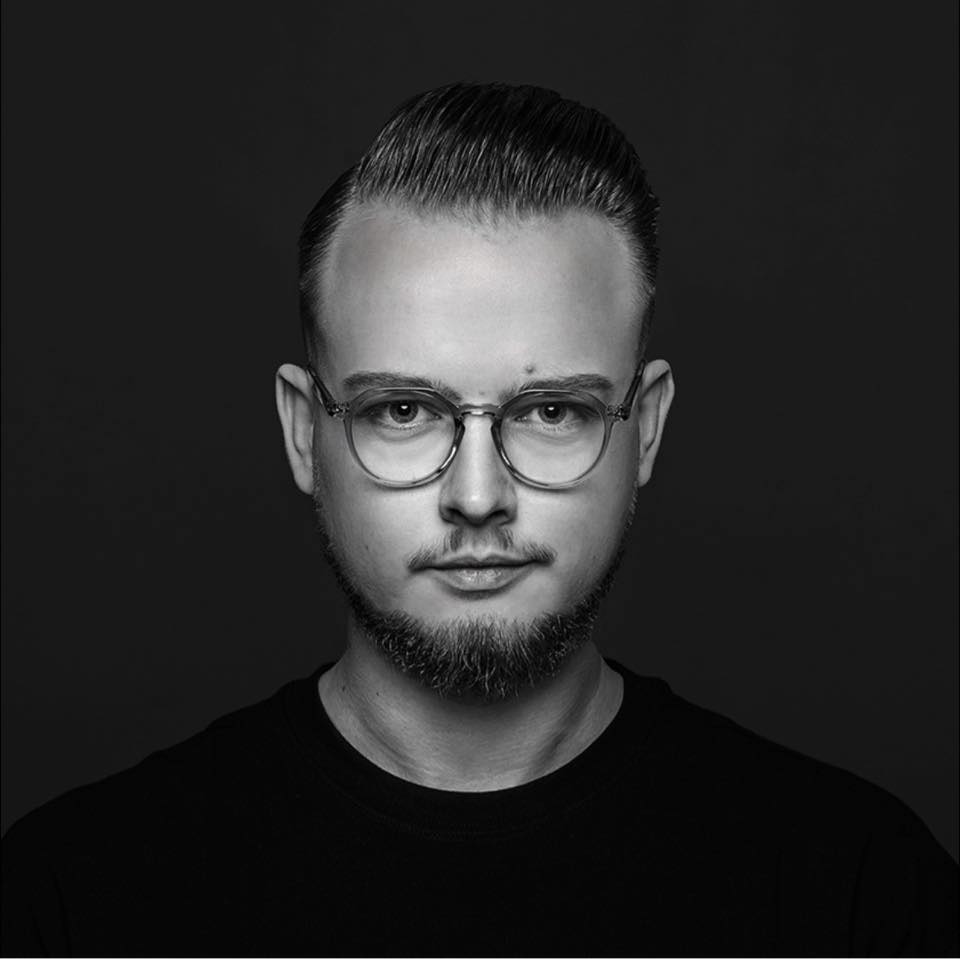
Przemysław Wojenka
Przemysław Wojenka
founder of Iskra
01 — Let's start with what you know

Let's start with Chopin.

He was born in Żelazowa Wola in Mazovia and grew up in Warsaw. Every five years that city hosts the International Chopin Piano Competition – and Japanese pianists have reached its podium in two competitions running.

2021
Kyōhei Sorita
2nd prize (shared)
2025
Shiori Kuwahara
4th prize (shared)

Tokyo to Warsaw is a direct flight. The rest of the way we can walk together.

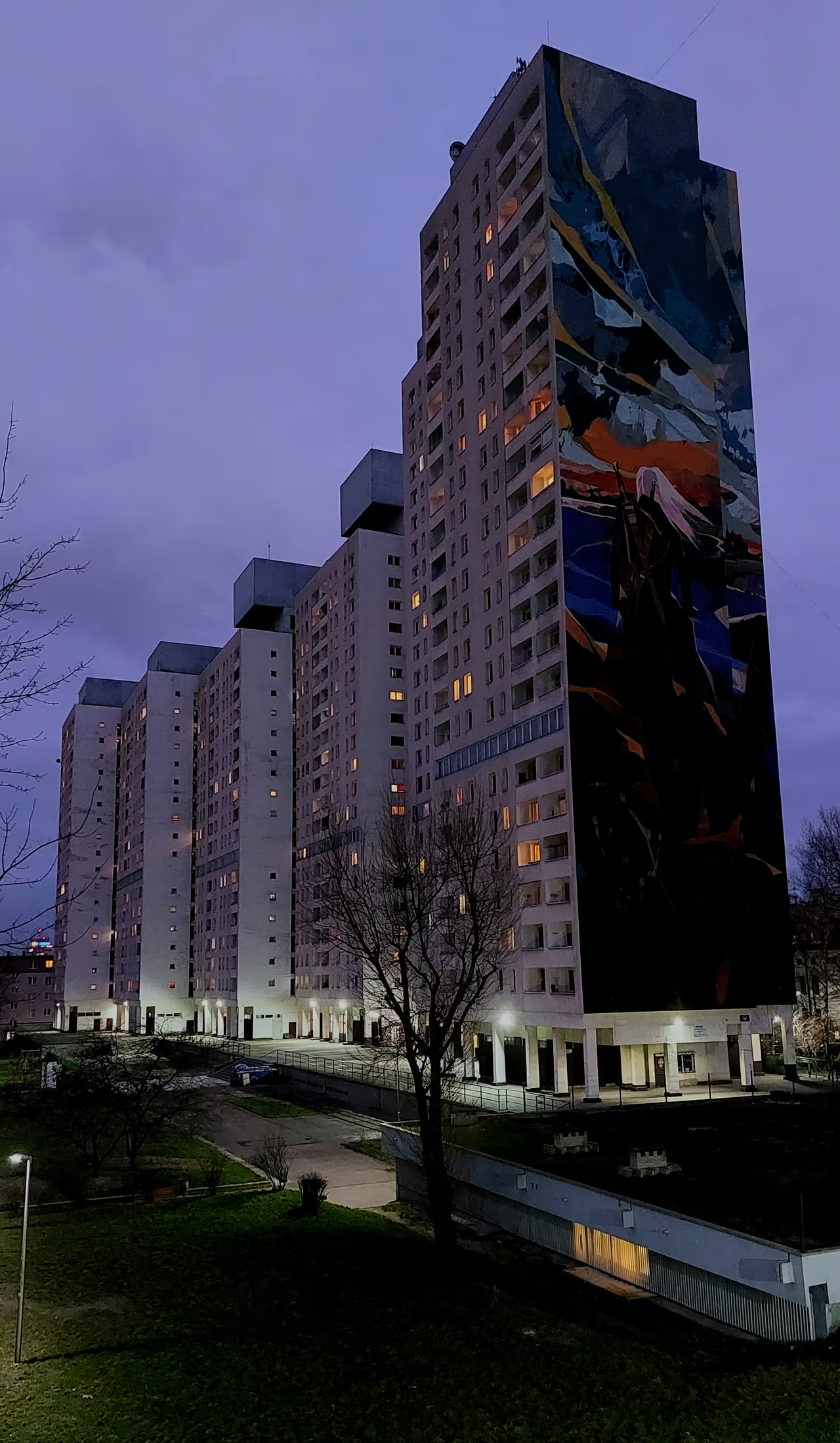
A 1970s tower block on Piotrkowska Street in Łódź with a mural of Geralt of Rivia
Łódź, 182 Piotrkowska St. · mural: Jakub Rebelka, 2021 · photo: Mafo, CC BY 4.0
02 — You probably know this too

Polish stories you know from the screen.

It isn't always obvious they were made in Poland. Three examples, each with a video from an official channel.

The tower block in the background stands on Piotrkowska Street in Łódź and dates from the 1970s. Since 2021 Geralt has been looking down from it – a mural by Jakub Rebelka.

© CD PROJEKT S.A. · frame from the video: The Witcher 3: Wild Hunt – Killing Monsters Cinematic Trailer · YouTube: The Witcher · the video loads from YouTube once you click
CD PROJEKT RED · Warsaw

The Witcher 3: Wild Hunt

The saga of Geralt of Rivia, a monster hunter, grew out of Andrzej Sapkowski's short stories. The Warsaw studio CD PROJEKT RED turned it into a game played all over the world.

  • Over a million copies sold in Japan (2022).
  • Over 65 million worldwide (2026).
  • The Remastered edition arrives on 29 September 2026.
© CD PROJEKT S.A. · Netflix · frame from the video: Cyberpunk: Edgerunners | Official Trailer (Studio Trigger Version) · YouTube: Netflix · the video loads from YouTube once you click
CD PROJEKT RED × Studio Trigger

Cyberpunk: Edgerunners

A ten-episode anime set in the world of Cyberpunk 2077. The Polish studio made it together with Japan's Studio Trigger, and Netflix released it in 2022.

  • This cut of the trailer was edited by Studio Trigger.
  • A second season was announced in 2025.
© Konami Digital Entertainment · frame from the video: SILENT HILL 2 | Launch Trailer · YouTube: SILENT HILL (Official) · the video loads from YouTube once you click
Bloober Team · Kraków

Silent Hill 2

Kraków's Bloober Team rebuilt Konami's classic horror game from 2001. Akira Yamaoka composed the music once again.

  • Released on 8 October 2024.
  • A million copies in three days, two million by January 2025.
  • Bloober Team is now working on a remake of the first Silent Hill.

Iskra is not affiliated with CD PROJEKT RED, Studio Trigger, Netflix, Bloober Team or Konami. The frames come from official videos on YouTube and illustrate the text about each title. Names and rights belong to their owners.

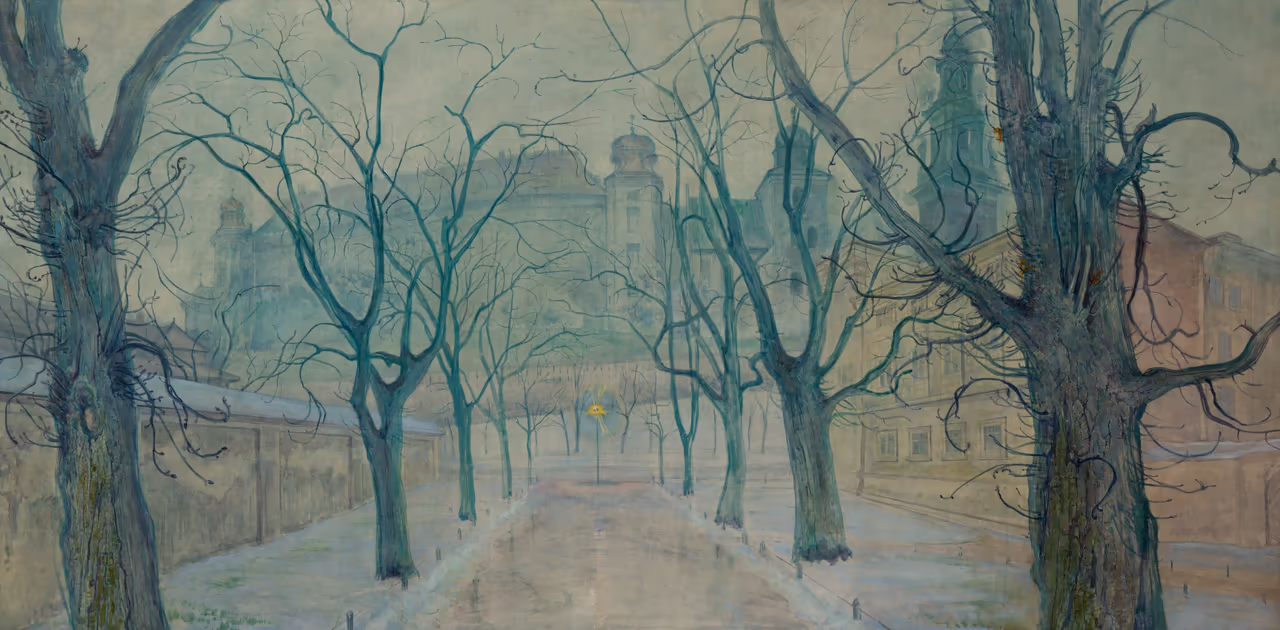
Misty dawn in the Planty park in Kraków, with the outline of Wawel in the distance
Stanisław Wyspiański, “Planty Park at Dawn”, 1894 · National Museum in Kraków
03 — And this you probably don't

What connects us.

Half a world apart – and sharing more than you would expect.

  1. 1919

    Japan recognises independent Poland. Our diplomatic relations are counted from that year.

  2. 1920–1922

    The Japanese Red Cross takes in 765 Polish children from Siberia and helps them get home. Poland still remembers it.

  3. 1994

    Manggha opens in Kraków – a centre of Japanese art built from Andrzej Wajda's Kyoto Prize, donations from thousands of Japanese people and a design by Arata Isozaki. The same year, under an agreement between our governments, a school opens in Warsaw that today is the Polish-Japanese Academy of Information Technology.

  4. 1995–1996

    After the Kobe earthquake Poles invite groups of 30 affected children. In 1996 they are welcomed by the former Siberian children.

  5. 2026

    Poland and Japan become comprehensive strategic partners.

04 — Fog and concrete

Two Polish ways to beauty.

Around 1900 Poland had Young Poland: fog, night and landscape. In 2025 Kyoto hosted its first large exhibition in Japan. After the war something entirely different arrives – concrete, cables and neon. I put them side by side, because the way I design grows out of that tension.

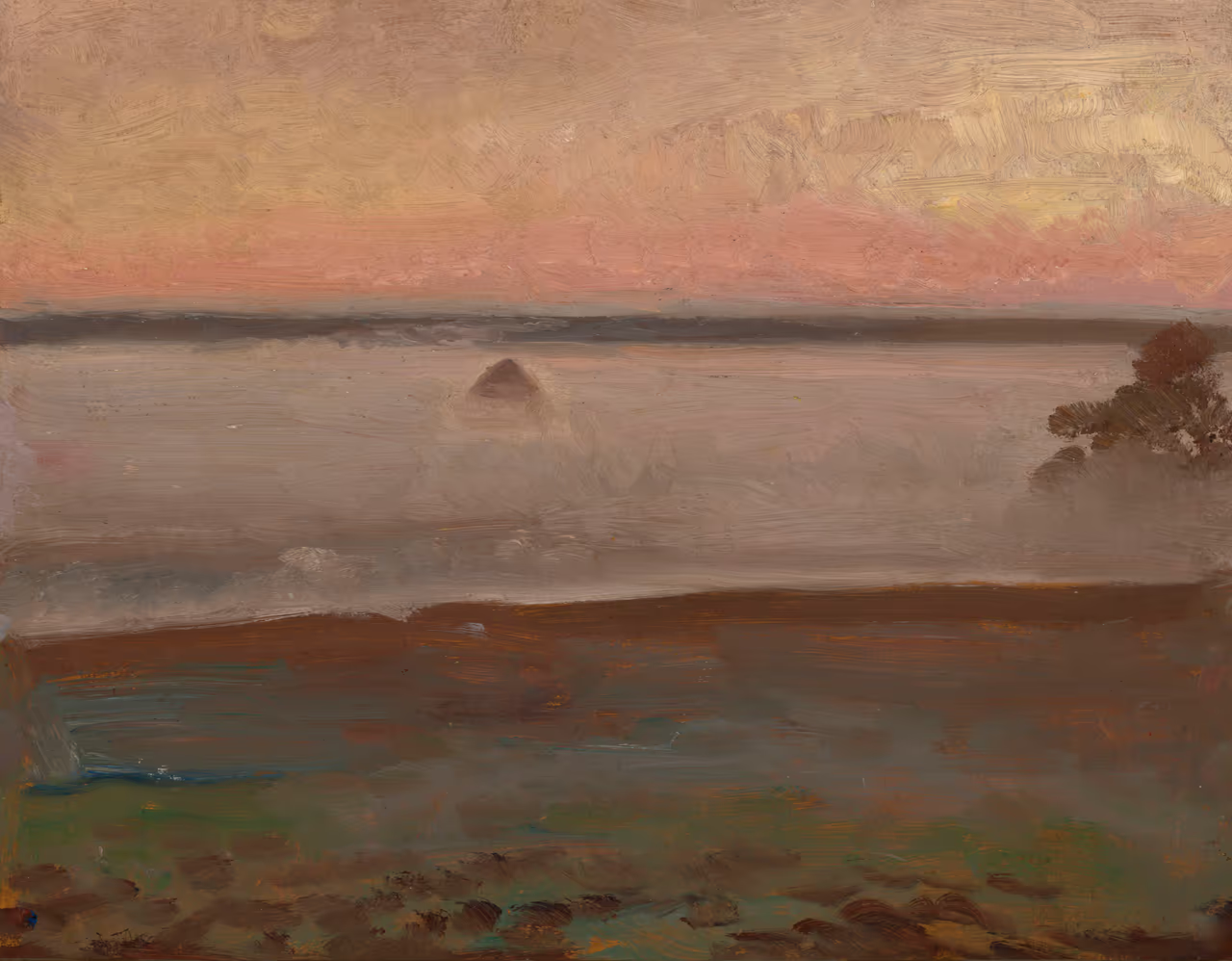
Morning fog over water, painted in horizontal bands of pink and grey
Józef Chełmoński, “Morning Mists”, 1910
01Young Poland · 1910

Fog

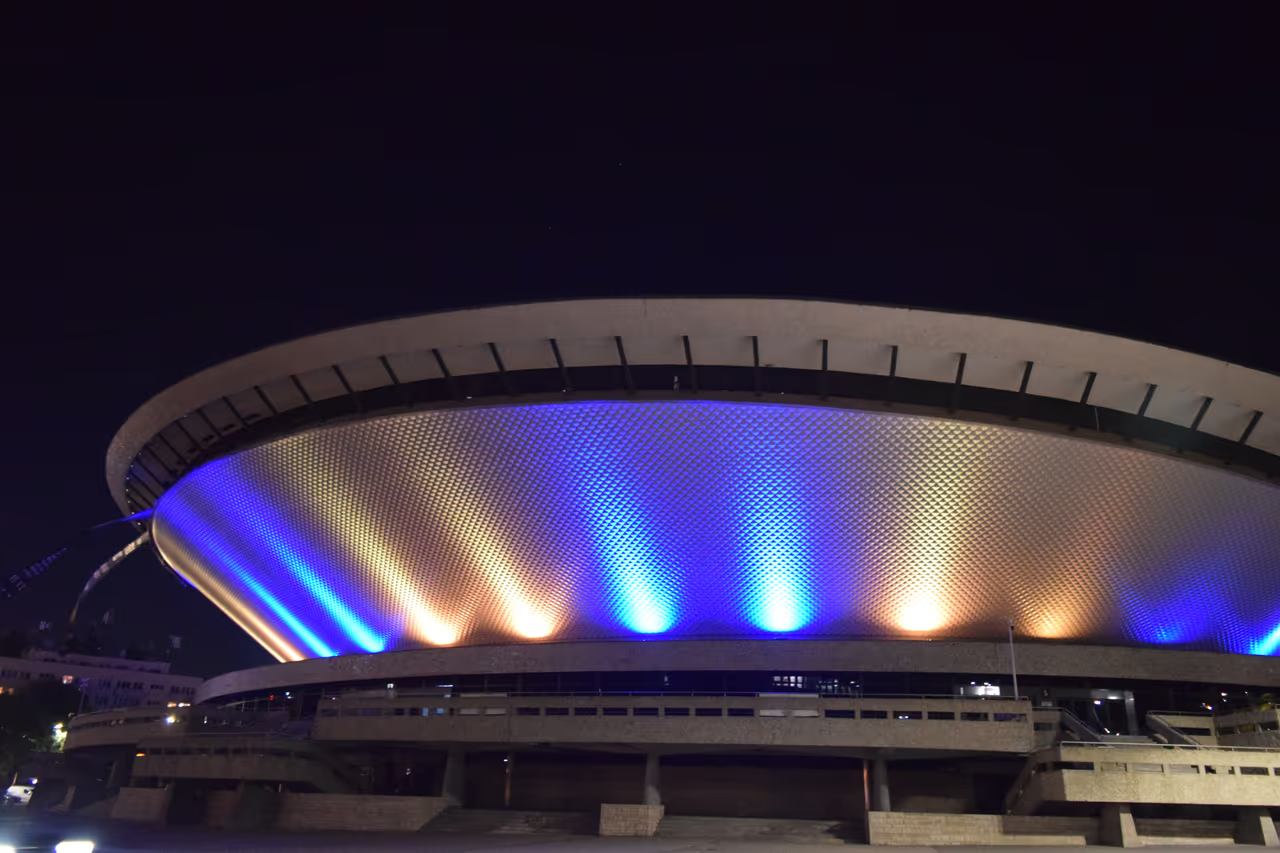
Chełmoński paints fog in which the whole landscape dissolves. More than half a century later the Spodek arena rises in Katowice – a hall whose roof, like Kenzō Tange's Yoyogi gymnasiums, hangs on cables rather than columns.

The Spodek arena in Katowice at night, its shell lit in blue and gold
Spodek, Katowice, 1971 · photo: Ranjithsiji, CC BY-SA 4.0
Post-war modernism · 1971
  • Yoyogi opened in 1964, Spodek in 1971. Both are protected monuments today.
  • Spodek's structure was designed by Wacław Zalewski, later a professor at MIT.
  • Spodek now hosts the Intel Extreme Masters esports tournament.
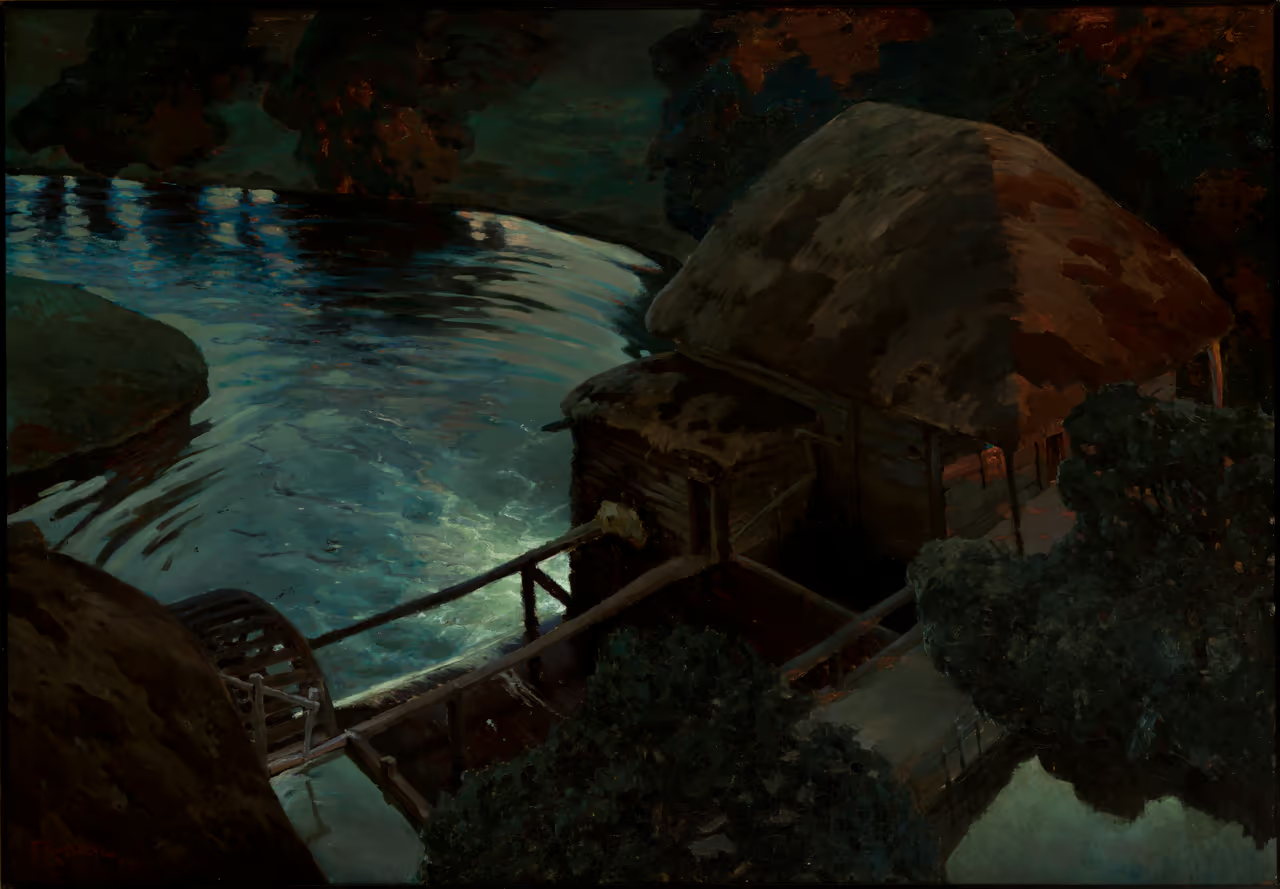
A mill at night above water reflecting the light
Ferdynand Ruszczyc, “The Mill”, 1898
02Young Poland · 1898

Night and light

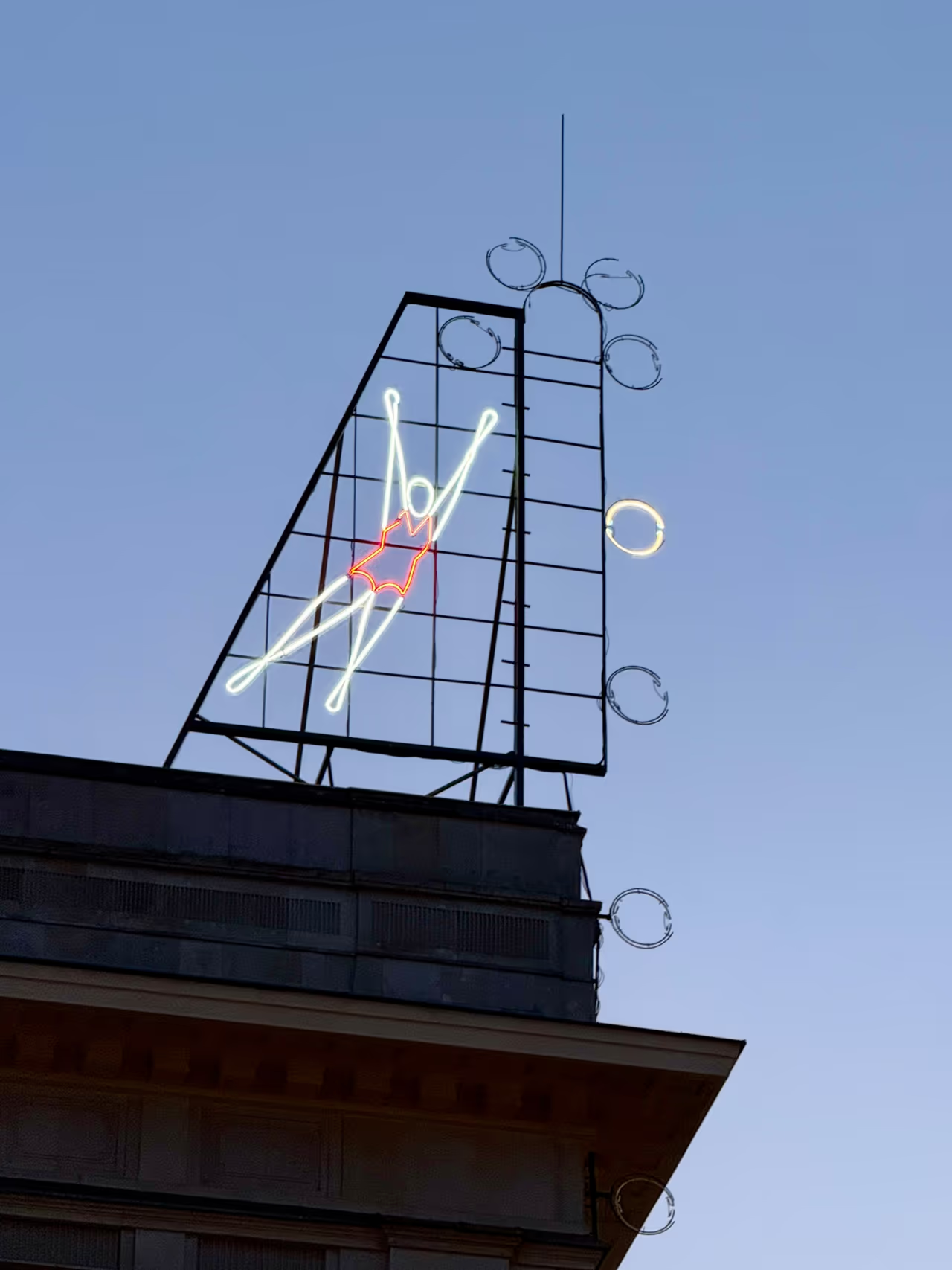
Ruszczyc looks for light in night water. In the 1950s and 60s Warsaw lights its own: more than 2,000 neons glow in the city centre.

A glowing neon of a volleyball player on a Warsaw rooftop at dusk
“Volleyball Player” neon, Warsaw, 1961 · design: Jan Mucharski · photo: Cybularny, CC BY 4.0
Post-war modernism · 1961
  • The neons were designed by architects and graphic designers – often the same people who made the Polish Poster School.
  • At the first International Poster Biennale in Warsaw in 1966, the Japanese designers Kazumasa Nagai and Hiroshi Tanaka won gold medals.
  • The “Volleyball Player” has lit Plac Konstytucji since 1961 and was restored in 2006.
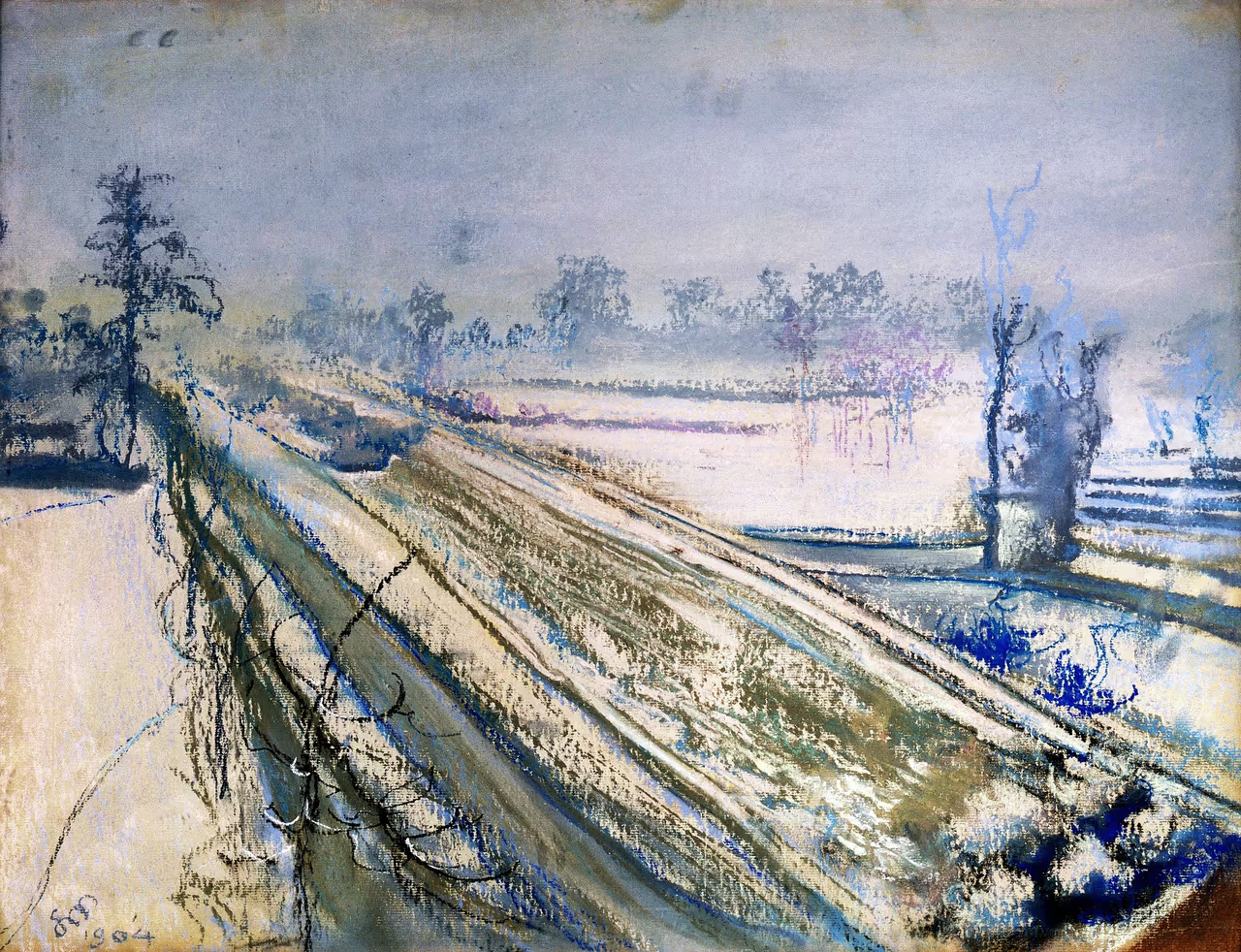
A winter view of the Kościuszko Mound from a window, in pastel
Stanisław Wyspiański, “View of the Kościuszko Mound from the Artist’s Studio”, 1904
03Young Poland · 1904

A conversation with Japan

At the turn of the century Polish painters learn from Japanese woodblock prints. Wyspiański paints the same view of the Kościuszko Mound again and again, and the Manggha Museum shows those pastels next to Hokusai's and Hiroshige's views of Fuji. Manggha itself was designed by Arata Isozaki, who gave the design to Kraków.

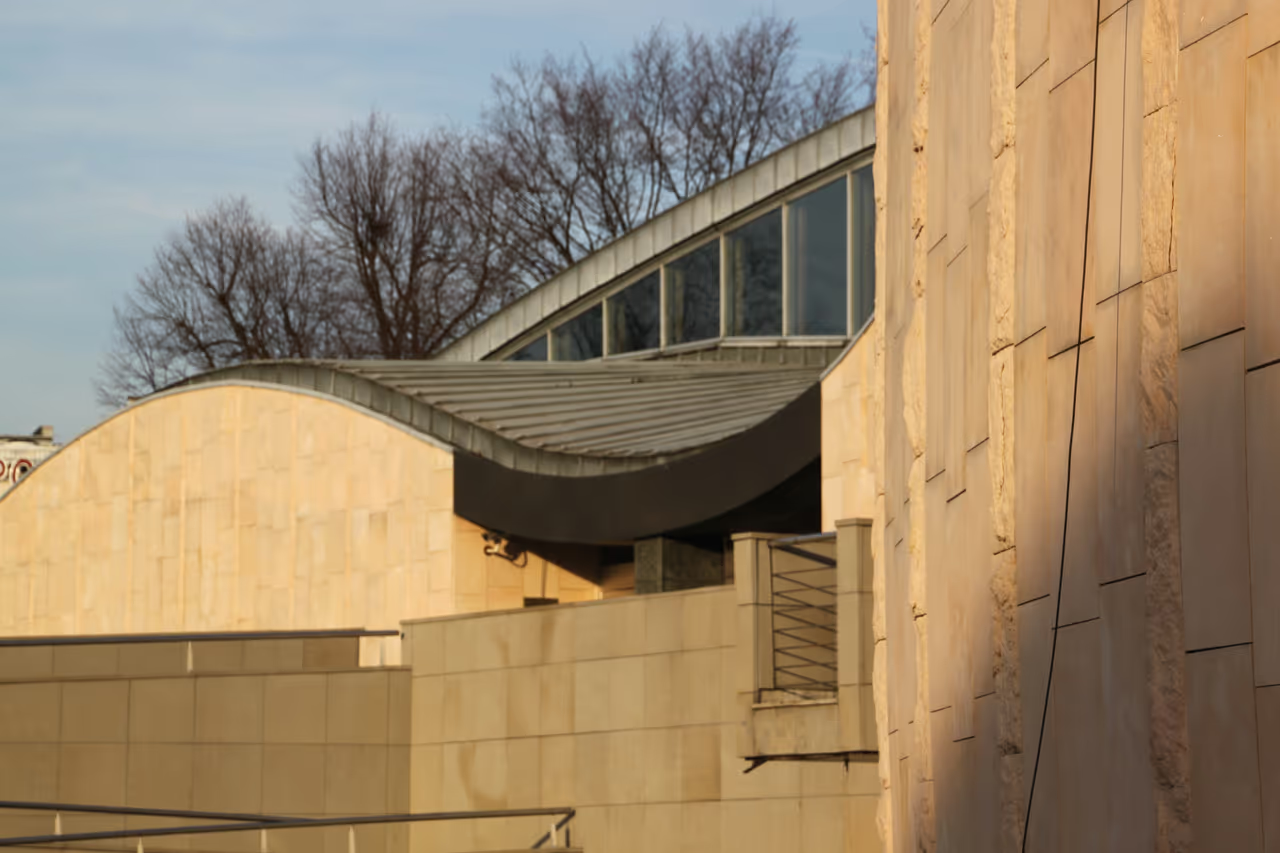
The wave-shaped roof of the Manggha Museum in Kraków in evening light
Manggha, Kraków, 1994 · design: Arata Isozaki · photo: mik Kraków, CC BY-SA 2.0
Manggha, Kraków · 1994
  • Julian Fałat visited Japan as early as 1885.
  • At the 1959 CIAM congress in Otterlo, Oskar Hansen presented Open Form and Kenzō Tange showed Kiyonori Kikutake's projects – the first presentation of Japanese Metabolism abroad.
  • After the 1963 Skopje earthquake the UN reconstruction effort was led by the Pole Adolf Ciborowski, and Tange's team won the competition for the new city centre.
  • In 1973–1974 the Muzeum Sztuki in Łódź showed the exhibition “Kenzo Tange. Architecture”.
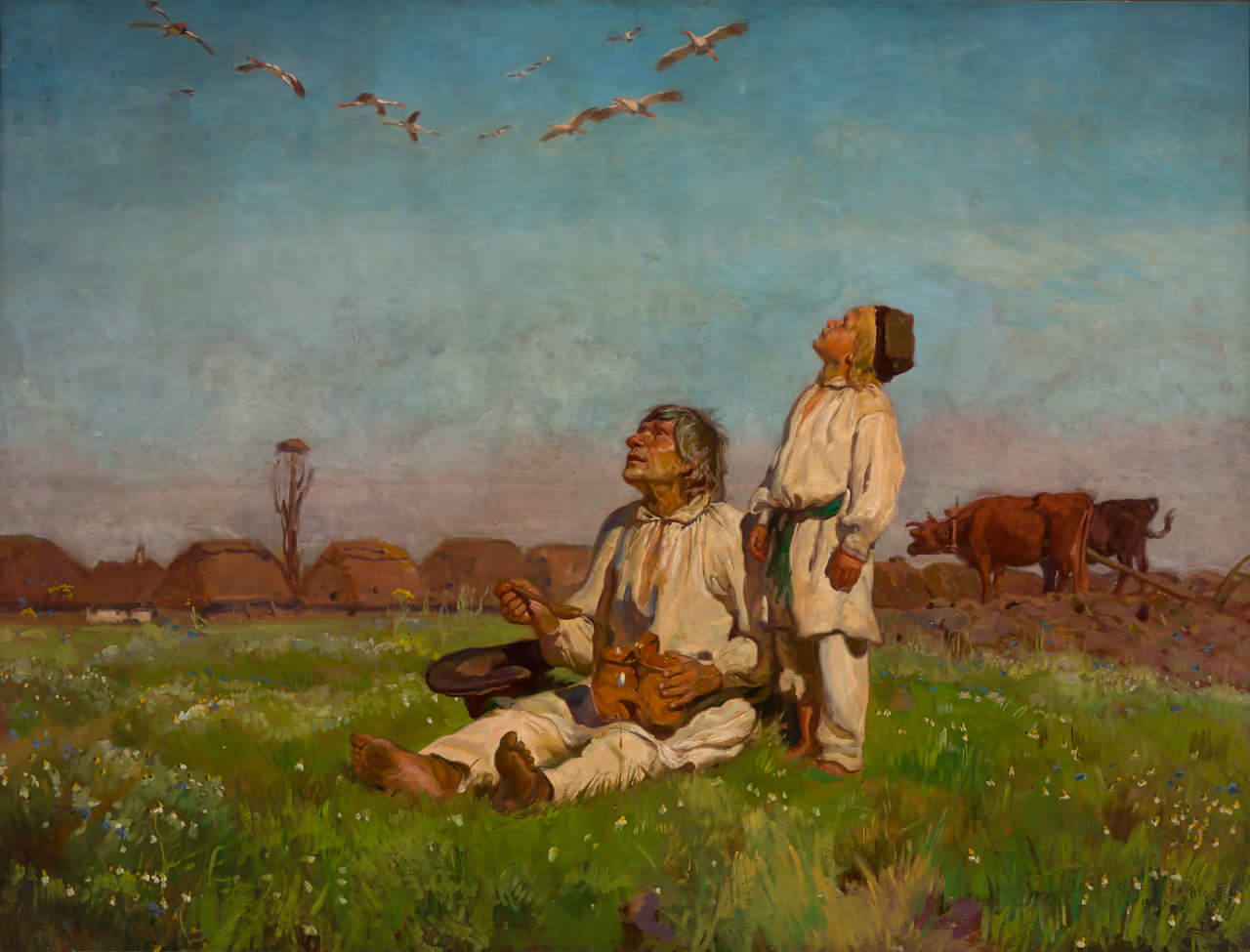
An old man and a boy in a meadow watching storks fly past
Józef Chełmoński, “Storks”, 1900
04Young Poland · 1900

Work and form

The poet Norwid wrote that beauty exists to inspire us to work – and that it applies to a plate, a glass and a basket as well. After the war, architects ask how to build homes for thousands of people that are good to live in.

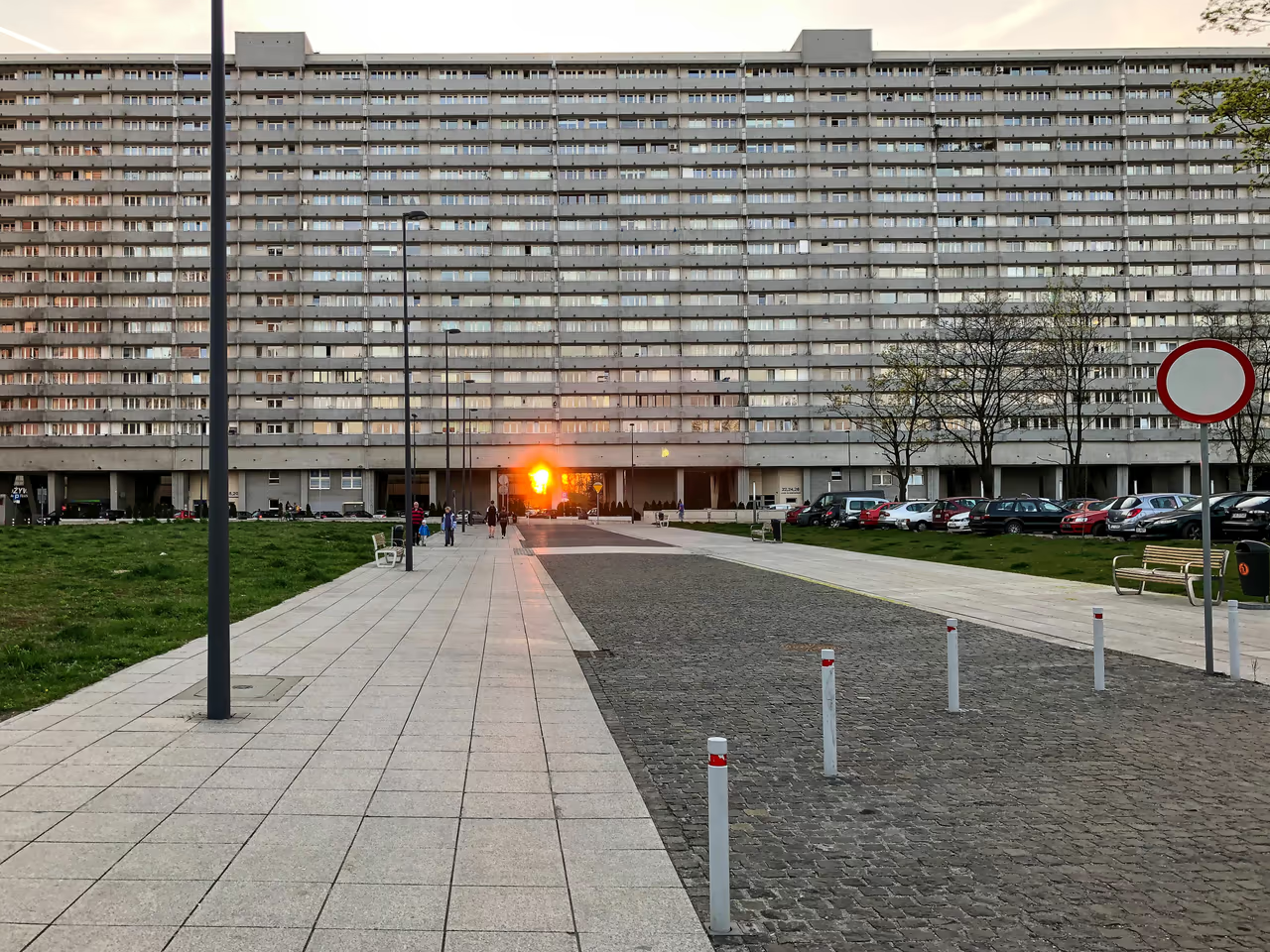
The long Superjednostka housing block in Katowice at sunset
Superjednostka, Katowice, 1966–1970 · architect: Mieczysław Król · photo: Krzysztof Popławski, CC BY-SA 4.0
Post-war modernism · 1970
  • “Storks” is one of the paintings behind the hand-painted film “The Peasants” (2023).
  • Katowice's Superjednostka, inspired by Le Corbusier, is an entire housing estate in one building.
  • Zofia and Oskar Hansen design Open Form: architecture co-created by the people who live in it.

A landscape in fog and a clear structure.
Iskra grows out of that tension.

We admire the form of these post-war buildings – not the political system that produced them.

05 — The provinces

Beyond the big cities.

Most of Poland lives in small towns and villages: at stations where the train stops for a minute, in the fields, in the morning fog above a river. That is where I am from – Iskra works from just outside Skierniewice.

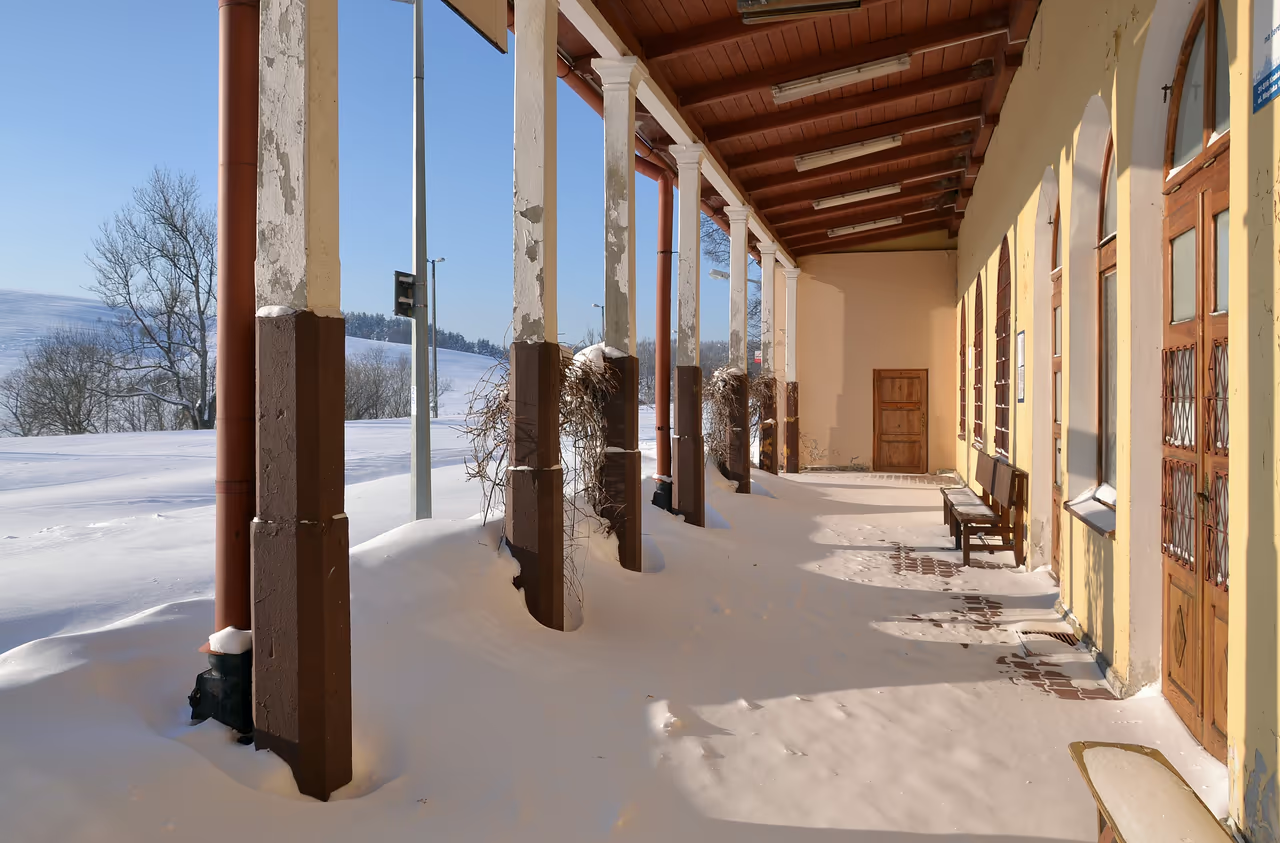
The wooden platform of the small Łupków railway station in winter
Łupków station in winter · photo: Pudelek, CC BY-SA 4.0
01Bieszczady · south-eastern Poland

Łupków station

A few houses, forest and a platform where the train stops for a moment. From here it is a short way to the Slovak border.

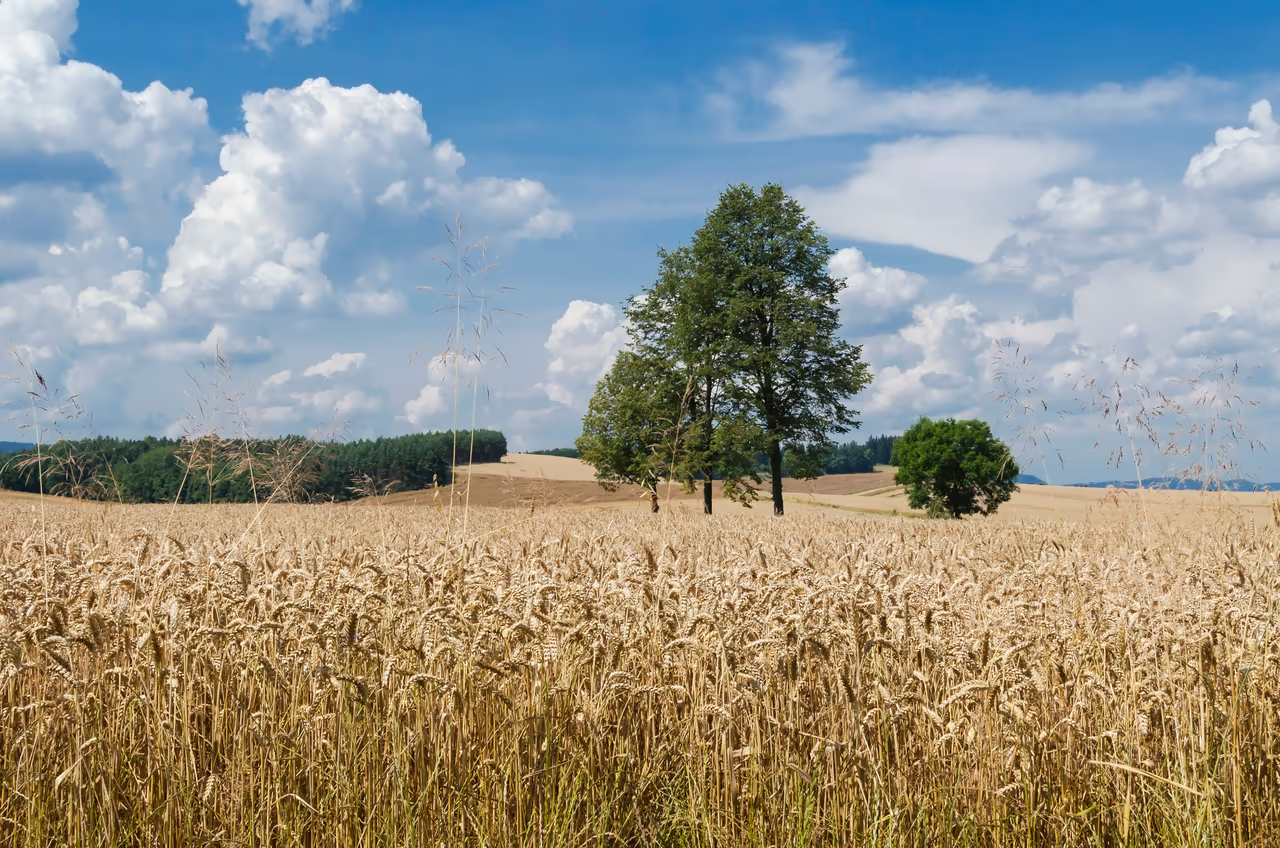
A grain field with a clump of trees under summer clouds
A field in Raszków · photo: Jacek Halicki, CC BY-SA 4.0
02Greater Poland

A field in Raszków

Grain, a clump of trees, clouds. This landscape runs past the train window for hours — and it is what Poland mostly is.

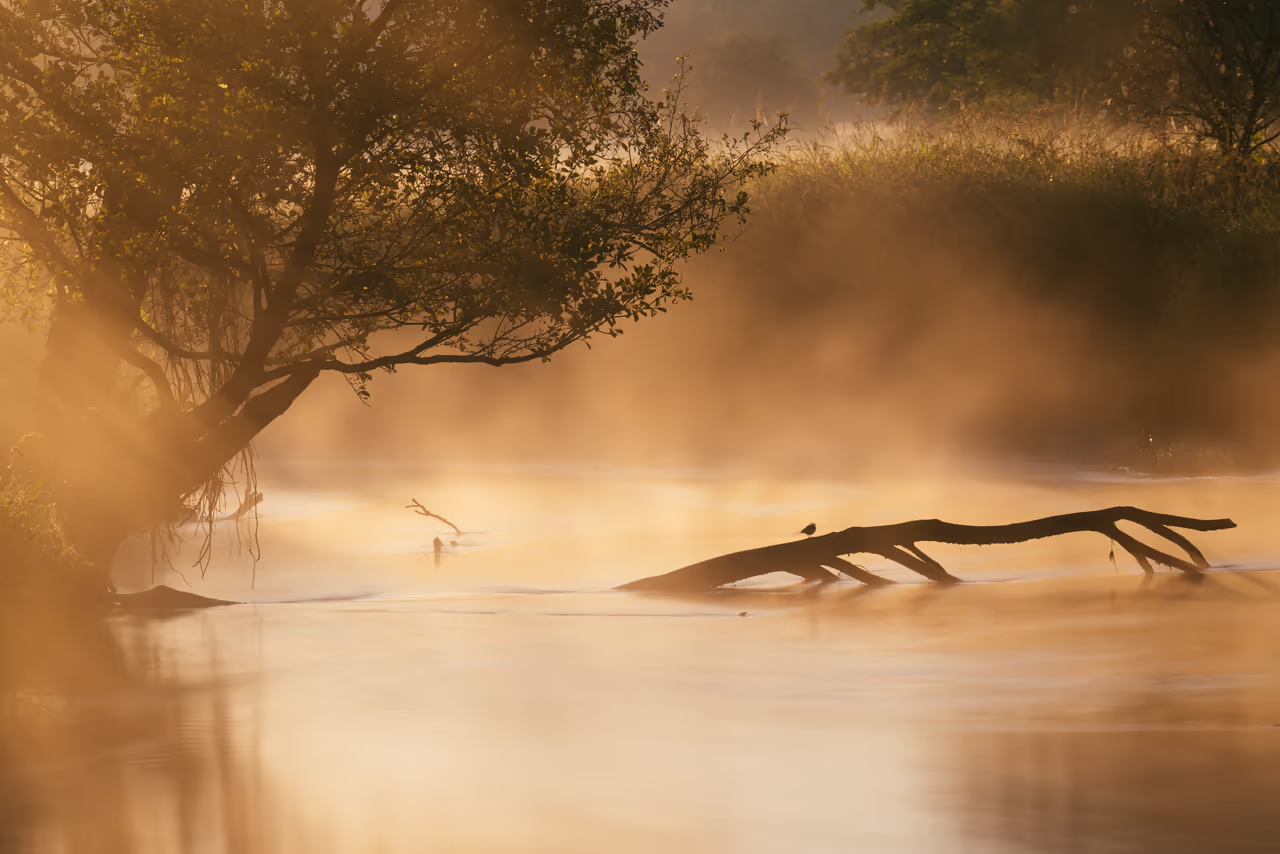
The Rawka river at dawn, golden mist above the water
The Rawka at dawn, Bolimów Landscape Park · photo: Bartek Mika, CC BY 3.0
03Mazovia · Bolimów Landscape Park

The Rawka at dawn

A river a dozen kilometres from Skierniewice, the town I work next to. At dawn the mist stands over the water exactly as it does in paintings from a century ago.

The Polish countryside reached the screen as well – in oil paintings.

film “The Peasants”: BreakThru Films · music: L.U.C. · frame from the video: L.U.C. & RB Film Orchestra feat. Tęgie Chłopy – Miłosny Opętaniec / Wole Wolta · YouTube: L.U.C.Films · the video loads from YouTube once you click
DK Welchman and Hugh Welchman · 2023

The Peasants

The most famous novel about the Polish countryside is “The Peasants” by Władysław Reymont – it won him the Nobel Prize in Literature in 1924. In 2023 the makers of “Loving Vincent” turned it into a hand-painted film. The video plays “Miłosny opętaniec”, the music from the scene where Antek and Jagna dance.

  • More than a hundred painters in studios in Poland, Lithuania, Ukraine and Serbia turned filmed shots into oil paintings.
  • The frames draw on Young Poland painting – among others on Chełmoński's “Storks”.
  • The music was written by Łukasz “L.U.C.” Rostkowski with close to a hundred musicians from several Slavic countries.
  • Over a million people saw the film in Polish cinemas. In Japan it was shown as 『農民』 at the Polish Film Festival in Tokyo in 2024.
  • At Expo 2025 in Osaka the film's music returned in the show “Chłopi Tańcuj Remixed”.

Iskra is not affiliated with the film's or the music's creators. All rights belong to their owners.

06 — What I can do for your company

Your product, told to Europe.

All of this can work for you. I design and build websites that take Japanese companies into the European market – from scratch, without templates.

01

Two conventions, two readers

A Japanese website is made for a Japanese reader: complete, precise, ready to be compared. That is a different route to simplicity, not the absence of it.

A reader in Europe looks for one thought first and the details afterwards. So I don't correct your site – I rebuild it for a new reader while keeping what matters most in it.

02

Why now

  • Japanese companies increasingly choose the European Union as the market that spreads their risk. JETRO, 2025
  • Nearly 90% of them lack the people to run operations abroad. JETRO, 2025
  • 67% of B2B buyers prefer to decide without talking to a salesperson. Your first salesperson is therefore your website. Gartner, 2026
03

What exactly I change

  • The order of the content: the most important thought on the first screen, details below.
  • The proof a European buyer looks for: case studies, numbers, references.
  • A layout for a different word length. 「お問い合わせ」 is 6 characters; “Request Information” is 21.
  • Languages: Europe is many markets. 57% of Germans only buy on German-language sites (CSA Research, 2020).
  • Search: separate keywords per market and correctly declared language versions.
  • European requirements: web accessibility and data protection (GDPR).
04

How it looks – a fictional example

The same company, two websites. On the left a layout that works for a reader in Japan, on the right one rebuilt for a reader in Europe.

For a reader in Japan
News and announcements
Campaign banner
Full product list
Model comparison
Company history
Company details
Downloads
Contact
For a reader in Europe
One thought and one image
Who the product is for
Proof: projects and numbers
Key products
Contact
05

How I work

  1. 01Conversationat your convenienceYou tell me what you sell and which market you want to enter.
  2. 02Analysis2–5 daysI go through your current site, your competitors and the reader in the target market.
  3. 03Proposal and quote1 dayYou get the scope, the schedule and the price in writing, ready to pass around internally.
  4. 04Design and build2–6 weeksI design, show you, and we correct it together. Then I build the site and launch it.
  5. 05Care after launchongoingHosting, updates and changes once the site is live.
07 — About me

There is one person behind Iskra.

Przemysław Wojenka
Przemysław Wojenka · Iskra

My name is Przemysław Wojenka and I run Iskra. I design and build every site myself – from the first sketch to launch.

I studied philosophy and cognitive science at the University of Warsaw. Cognitive science taught me where people look and where they get lost. Philosophy taught me that every thing needs the word that fits it. I also taught philosophy and logic at the secondary school in Skierniewice that I attended myself.

I know the games world from the stage side. For several years I commentated League of Legends matches for ESL and hosted exhibitor stages at Intel Extreme Masters in Katowice, Poznań Game Arena and Warsaw Games Week.

For almost four years I was a developer at the Warsaw agency Cape Morris, working on projects for brands such as Wiśniowski, Tefal, Krups, Magnum, Tullamore and Bayer. Today I work directly with companies. The person you talk to is the person who builds your site.

In September 2026 I came to Tokyo with the economic mission of the Łódź region. I want this to be the beginning of a long collaboration, not a one-off visit.

“Give the right word to the right thing.”

Cyprian Kamil Norwid

The path so far

  1. 2015–2021League of Legends commentator for ESL; host of exhibitor stages at Intel Extreme Masters, Poznań Game Arena and Warsaw Games Week
  2. 2017–2023University of Warsaw: philosophy (BA and MA) and cognitive science
  3. 2019–2025Teacher of logic and philosophy at the Konarski Classical Secondary School in Skierniewice, with a break
  4. 2021–2022UX design internship at BaseUp: research and app design from sketch to prototype
  5. 2022–2023Front end of the system that moved the Polish Philosophy Olympiad from paper to the web
  6. 2022–2026Developer at the Cape Morris agency in Warsaw: projects for Wiśniowski, Tefal, Krups, Magnum, Tullamore and Bayer
  7. 2024Iskra opens for business
  8. 2026Projects: the EWMES 2026 conference site, CEKARO, Hegasa
  9. 09.2026Tokyo Game Show – economic mission of the Łódź region

Company details

Name
Iskra Przemysław Wojenka
Legal form
sole proprietorship (Polish law)
Owner
Przemysław Wojenka
Established
14 May 2024 (per CEIDG)
Address
Mokra Prawa 190A, 96-100 Skierniewice, Łódź Voivodeship, Poland
Scope
design and development of websites and web applications, visual identity
Tax ID (NIP)
8361886236
Register
CEIDG – the public register of businesses in Poland. The entry can be checked by NIP in the company search at biznes.gov.pl
Working languages
Polish, English
Time difference
Japan is 7 hours ahead in summer, 8 in winter
As of
September 2026
Shall we talk?
Contact

Your product
in Europe –
let's start with a conversation.

Write and tell me what you sell and which market you want to enter. I reply by the next working day at the latest. Online meetings are easiest in the Polish morning – early evening in Japan.

E-mailkontakt@iskratech.comPhone+48 516 328 218
TimePoland: UTC+1, UTC+2 in summer

Image credits

Public-domain paintings and freely licensed photographs from Wikimedia Commons. For architecture and neons we also credit their creators.

  1. Stanisław Masłowski, “Moonrise”, 1884, National Museum in Kraków · public domain · Wikimedia Commons
  2. photo: Mafo, the “Manhattan” estate in Łódź with the Witcher mural, 2023 · mural: Jakub Rebelka (2021); building: Śródmiejska Dzielnica Mieszkaniowa, Łódź (1975–1982) · CC BY 4.0 · Wikimedia Commons · cropped and darkened for this page
  3. Stanisław Wyspiański, “Planty Park at Dawn”, 1894, National Museum in Kraków · public domain · Wikimedia Commons
  4. Józef Chełmoński, “Morning Mists”, 1910, National Museum in Warsaw · public domain · Wikimedia Commons
  5. photo: Ranjithsiji, the Spodek arena in Katowice at night, 2024 · architects: Maciej Gintowt, Maciej Krasiński; structure: Wacław Zalewski, Andrzej Żórawski · CC BY-SA 4.0 · Wikimedia Commons · cropped and darkened for this page; the modified image is shared under the same licence
  6. Ferdynand Ruszczyc, “The Mill”, 1898, National Museum in Kraków · public domain · Wikimedia Commons
  7. photo: Cybularny, the “Volleyball Player” neon at Plac Konstytucji in Warsaw, 2026 · neon: Jan Mucharski (designed 1960, unveiled 1961, rebuilt 2006) · CC BY 4.0 · Wikimedia Commons · cropped and darkened for this page
  8. Stanisław Wyspiański, “View of the Kościuszko Mound from the Artist’s Studio”, 1904, National Museum in Warsaw · public domain · Wikimedia Commons
  9. photo: J. Nowostawska-Gyalókay for mik Kraków, the Manggha Museum, 2015 · architects: Arata Isozaki with Krzysztof Ingarden and Jacek Ewý (opened 1994) · CC BY-SA 2.0 · Wikimedia Commons · cropped and darkened for this page; the modified image is shared under the same licence
  10. Józef Chełmoński, “Storks”, 1900, National Museum in Warsaw · public domain · Wikimedia Commons
  11. photo: Krzysztof Popławski, the Superjednostka block in Katowice, 2019 · architect: Mieczysław Król; structure: Franciszek Klimek · CC BY-SA 4.0 · Wikimedia Commons · cropped and darkened for this page; the modified image is shared under the same licence
  12. photo: Pudelek (Marcin Szala), Łupków railway station in winter, 2017 · CC BY-SA 4.0 · Wikimedia Commons · cropped and darkened for this page; the modified image is shared under the same licence
  13. photo: Jacek Halicki, a field in Raszków, 2014 · CC BY-SA 4.0 · Wikimedia Commons · cropped and darkened for this page; the modified image is shared under the same licence
  14. photo: Bartek Mika, “The Rawka river at dawn, Bolimów Landscape Park”, 2018 · CC BY 3.0 · Wikimedia Commons · cropped and darkened for this page

Frames from official videos on YouTube appear only next to the text about that work, as a quotation. The videos play from YouTube.

  1. „The Witcher 3: Wild Hunt – Killing Monsters Cinematic Trailer” · © CD PROJEKT S.A. · YouTube: The Witcher
  2. „Cyberpunk: Edgerunners | Official Trailer (Studio Trigger Version)” · © CD PROJEKT S.A. · Netflix · YouTube: Netflix
  3. „SILENT HILL 2 | Launch Trailer” · © Konami Digital Entertainment · YouTube: SILENT HILL (Official)
  4. „L.U.C. & RB Film Orchestra feat. Tęgie Chłopy – Miłosny Opętaniec / Wole Wolta” · film “The Peasants”: BreakThru Films · music: L.U.C. · YouTube: L.U.C.Films
This page in:
日本語EnglishPolski